Isfahan – known in Persian as Nesf-e Jahan (Half the World) – is arguably Iran’s most magnificent city. A UNESCO World Heritage treasure trove, Isfahan’s extraordinary Islamic architecture, ancient bridges, and vibrant culture make it a must-visit destination for anyone traveling to Iran in 2026. This guide covers everything you need to know to explore Isfahan to the fullest.
Getting to Isfahan
Isfahan is well-connected to Tehran and other major Iranian cities:
- By plane: Isfahan International Airport has flights from Tehran (1 hour, multiple daily), plus some international routes
- By train: 6-7 hours from Tehran; comfortable overnight option available
- By bus: 5-6 hours from Tehran (VIP buses are excellent)
Before planning your trip to Isfahan, make sure you have your Iran eVisa sorted. Start your application at evisa.mfa.ir at least 3-4 weeks in advance. See our full application guide for details.
Imam Square (Naqsh-e Jahan) – The Heart of Isfahan
Naqsh-e Jahan Square is Iran’s greatest architectural achievement and one of the largest public squares on earth (500m x 160m). Designated a UNESCO World Heritage Site, it is surrounded by four monumental structures:
Imam Mosque (Shah Mosque)
Completed in 1629, the Imam Mosque is considered one of the finest examples of Persian Islamic architecture anywhere in the world. Its enormous blue-tiled dome dominates the Isfahan skyline. The interior acoustics are extraordinary – a hand clap at the center echoes seven times. Plan at least 1.5-2 hours for a proper visit.
Sheikh Lotf Allah Mosque
Smaller than the Imam Mosque but arguably even more beautiful. Built as a private mosque for the Shah’s family, it has no minarets. The dome’s interior is a hypnotic swirl of cream and amber tilework that changes color throughout the day as light shifts through the lanterns. One of Iran’s most photographed interiors.
Ali Qapu Palace
The six-story royal palace on the western side of the square offers excellent views over Naqsh-e Jahan from its terrace. The Music Hall (upper floor) features extraordinary plasterwork “vases” that served as acoustic resonators – an ingenious example of Persian engineering aesthetics.
Isfahan Grand Bazaar
The northern gateway leads to the sprawling covered bazaar, one of the oldest in the world. Isfahan’s bazaar is particularly known for fine metalwork (qalamkari), miniature paintings, Persian carpets, and silver jewelry. Even if you don’t buy, it’s a fascinating labyrinth to explore.
Isfahan’s Legendary Bridges
Isfahan’s bridges over the Zayandeh River are masterpieces of Safavid engineering that double as social spaces. In the evenings, Isfahanis gather on and under the bridges to chat, sing, and enjoy the cool air.
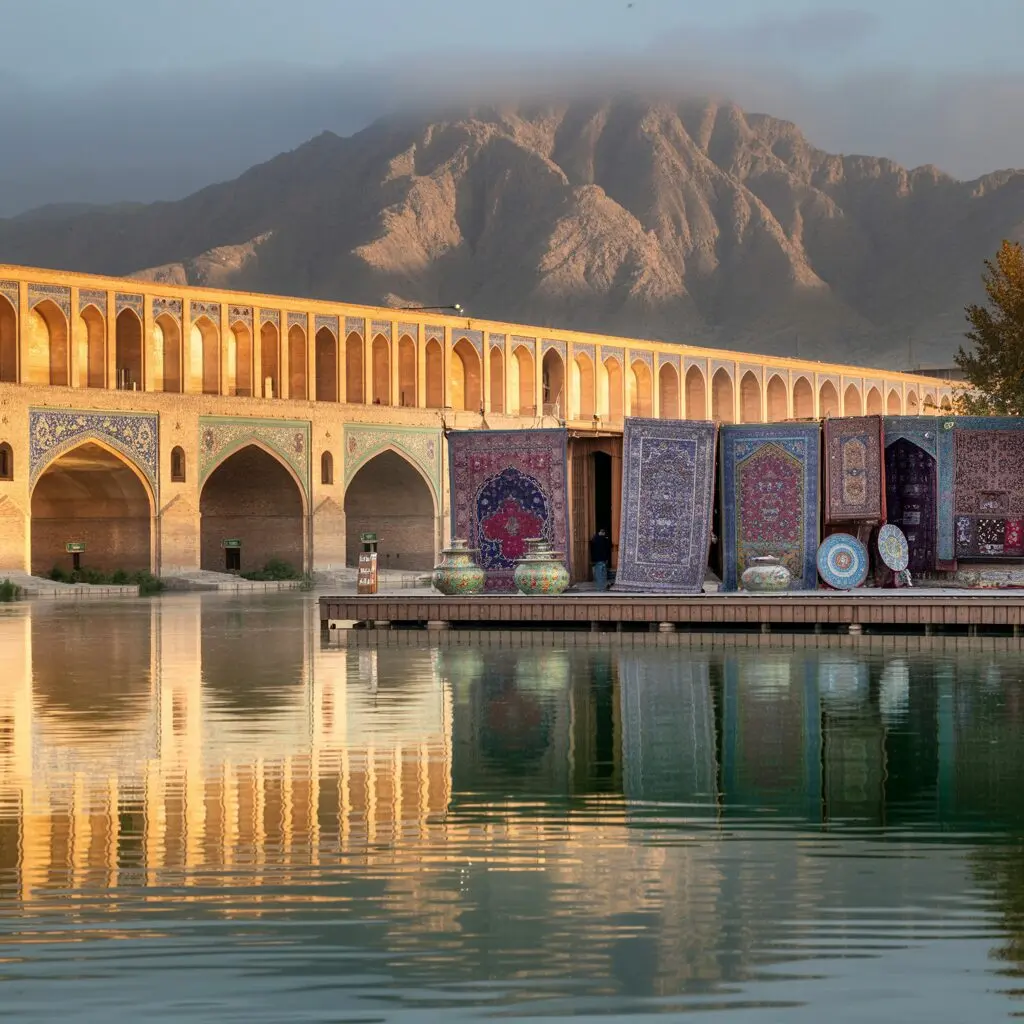
- Si-o-Se-Pol (Bridge of 33 Arches): 295 meters long, built 1602. The most iconic bridge in Iran. Perfect for evening strolls
- Khaju Bridge: Built 1650, more ornate than Si-o-Se-Pol. Features painted pavilions and was used as a dam. One of the most romantic spots in Iran
Jolfa – Isfahan’s Armenian Quarter
The Jolfa district was established by Shah Abbas I in the early 17th century for Armenian Christians brought from Julfa in Azerbaijan. Today it’s a charming neighborhood with art galleries, cafes, and the remarkable Vank Cathedral – a stunning hybrid of Persian and Armenian Christian architecture. The church’s interior, covered in frescoes depicting biblical scenes, is a must-see.
Chehel Sotoun Palace
The “Palace of Forty Columns” (actually 20 columns reflected in a central pool to create the illusion of 40) is another UNESCO highlight. The palace houses magnificent frescoes depicting royal banquets and battle scenes. The garden setting is ideal for an afternoon visit.
Day Trips from Isfahan
- Kashan (2 hours): Historic mansions, rose water distilleries, and the Fin Garden
- Natanz: Mountain village famous for apples and pomegranates
- Meybod and Naeen: Ancient desert caravanserais and traditional carpet weaving
- Abyaneh: A preserved ochre-colored mountain village with pre-Islamic traditions
Where to Stay and Eat in Isfahan
Isfahan has excellent accommodation for all budgets:
- Traditional guesthouses (Boutique hotels): Many converted historic mansions offer unique stays for €30-80/night
- Budget hostels: Available around the bazaar area from €10-20/night
- Luxury hotels: Several international-standard hotels for €80-200/night
For food, the riverside restaurants near the bridges offer excellent traditional Persian cuisine. Try Beryani – an Isfahan specialty of minced lamb with garlic and spices, served with flatbread – for the most local dining experience.
Frequently Asked Questions
How many days do I need to see Isfahan?
3 full days is ideal for seeing all the major sights at a comfortable pace. 2 days is possible for the highlights. With day trips to Kashan or Abyaneh, 4-5 days gives a complete experience.
What is the best time to visit Isfahan?
Spring (March-May) and Autumn (September-November) offer the best weather. Avoid summer (extreme heat, 38-42°C). Nowruz (around March 21) is beautiful but very crowded – book accommodation well in advance.
Can I visit Naqsh-e Jahan Square for free?
Walking around the square is free. Entering the mosques, palaces, and bazaar involves entrance fees (each site costs approximately 5,000-15,000 Toman). Buy a combined ticket at the square entrance for savings.
Is Isfahan covered by the Iran eVisa?
Yes. The Iran eVisa covers travel throughout Iran, including Isfahan. Once you have an approved eVisa, you can travel anywhere within the country during your permitted stay. Apply at evisa.mfa.ir.